Update
Cloud vs. On-Prem vs. Hybrid ERP: Choosing for Your Fashion Business with A2000 Software
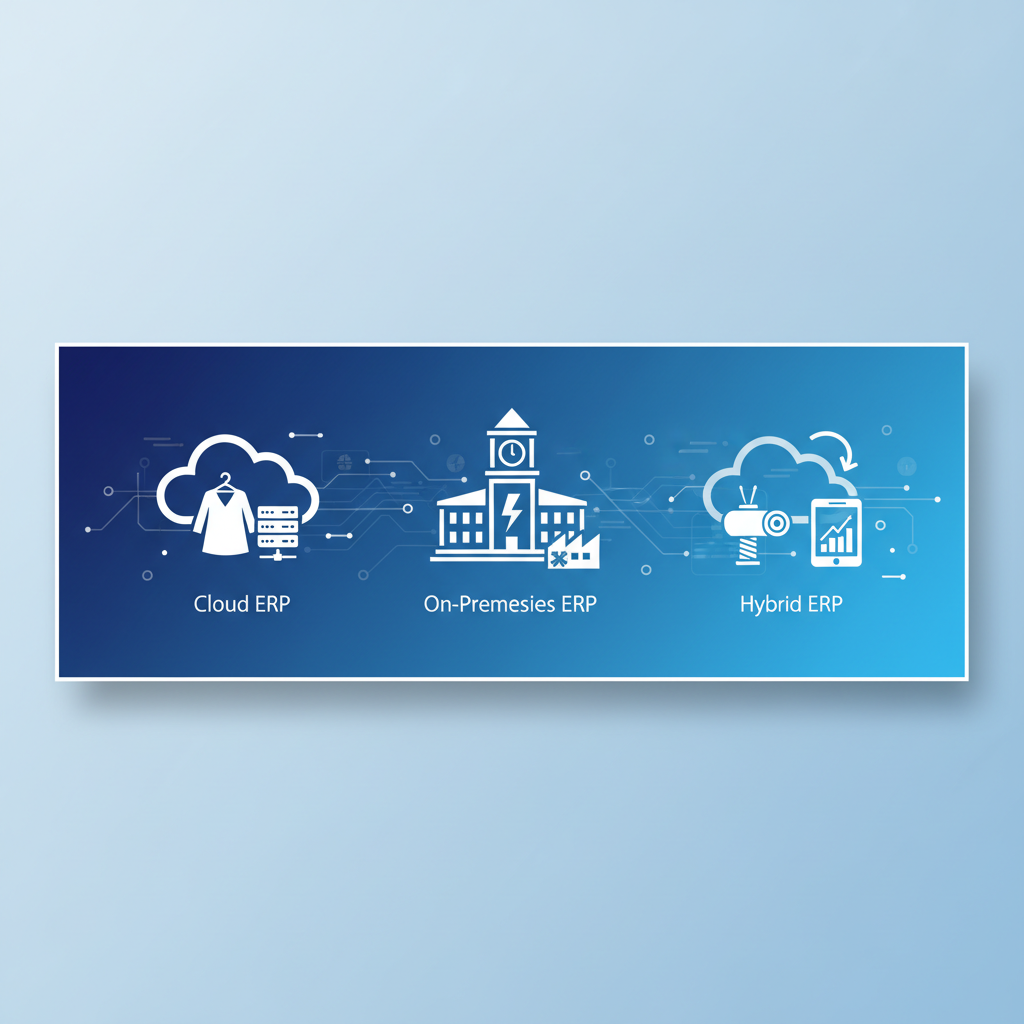
How Do I Choose Between Cloud, Hybrid, and On-Prem ERP for a Fashion or Garment Business?
For a fashion or garment business, choosing between cloud, hybrid, and on-premise ERP deployment models hinges on your specific operational needs, IT infrastructure, budget, growth strategy, and comfort with data security and control. Cloud ERP, particularly purpose-built solutions like A2000 Software, is increasingly the optimal choice for fashion companies due to its scalability, flexibility, reduced IT overhead, and AI-powered insights crucial for navigating rapid industry cycles. While on-premise offers maximum control, and hybrid provides a blend, the agility and innovation inherent in cloud solutions make them superior for modern apparel and footwear brands.
The fashion industry operates at a breakneck pace, driven by seasonal trends, complex supply chains, and demanding consumers. Your ERP system isn't just a backend tool; it's the central nervous system of your entire operation, influencing everything from design to delivery. The deployment model you select for your Enterprise Resource Planning (ERP) system has profound implications for your total cost of ownership, scalability, security, and ability to adapt to market changes. Let's explore the nuances of each option.
Understanding ERP Deployment Models
1. Cloud ERP (Software as a Service - SaaS)
Cloud ERP, often referred to as SaaS, involves hosting the ERP software and its associated data on remote servers managed by the ERP vendor. Access is typically via a web browser over the internet, and the software is delivered on a subscription basis.
Advantages for Fashion & Garment Businesses:
- Scalability & Elasticity: Cloud solutions can easily scale up or down to meet fluctuating demands, such as during peak seasons, new product launches, or rapid growth. This is critical for fashion's inherent seasonality.
- Reduced IT Overhead: The vendor handles all infrastructure, maintenance, updates, and security, freeing your internal IT team (or eliminating the need for one) to focus on strategic initiatives.
- Accessibility: Users can access the system from anywhere, at any time, on any device with an internet connection. This supports remote work, global teams, and supply chain collaboration.
- Automatic Updates & Innovation: Cloud ERPs, especially those like A2000 Software (Ai2000), receive continuous updates with new features, security patches, and regulatory compliance, including AI-driven functionalities, without manual intervention.
- Lower Upfront Costs: Typically subscription-based, eliminating large upfront software license and hardware investments.
- Faster Deployment: Cloud ERPs can often be implemented more quickly than on-premise systems.
- Disaster Recovery: Vendors usually have robust disaster recovery protocols built-in, offering better data protection.
Considerations:
- Internet Dependency: Requires a reliable internet connection.
- Less Customization Control: While highly configurable, deep, core-level customizations might be more restricted than on-premise.
- Data Ownership Perception: Although your data remains yours, it resides on a third-party server.
2. On-Premise ERP
With on-premise ERP, the software and all its data are installed and run on your company's own servers within its physical premises. Your organization is responsible for purchasing, installing, maintaining, and upgrading all hardware and software.
Advantages for Fashion & Garment Businesses:
- Maximum Control: Complete control over the entire system, hardware, software, security, and customization.
- Data Security: For highly sensitive data or strict compliance requirements, some companies prefer to keep all data in-house.
- Deep Customization: Greater flexibility for extensive, bespoke modifications to perfectly match unique, complex workflows.
- Ownership Model: A one-time license purchase (potentially with ongoing maintenance fees) might be preferred by companies averse to subscription models.
Considerations:
- High Upfront Costs: Significant capital expenditure for software licenses, servers, infrastructure, and implementation.
- High Ongoing IT Burden: Requires dedicated in-house IT staff for maintenance, security, updates, backups, and troubleshooting.
- Scalability Challenges: Scaling requires additional hardware purchases and complex configurations.
- Slower Innovation: Updates and new features are typically less frequent and require manual installation, leading to slower adoption of new technologies like AI.
- Disaster Recovery: Requires robust and costly in-house disaster recovery planning.
3. Hybrid ERP
A hybrid ERP model combines elements of both cloud and on-premise deployments. Typically, core ERP functions (like financials or manufacturing) might remain on-premise, while more flexible or outward-facing modules (like CRM, e-commerce, or supply chain portals) are deployed in the cloud.
Advantages for Fashion & Garment Businesses:
- Best of Both Worlds: Aims to leverage the strengths of both models, maintaining control over critical data on-prem while gaining flexibility and accessibility for certain functions in the cloud.
- Staggered Migration: Allows companies to transition to the cloud gradually, reducing disruption.
- Optimized Resource Allocation: Can place resource-intensive or highly critical components on-prem and less demanding ones in the cloud.
Considerations:
- Complexity: Managing two distinct environments requires greater integration efforts and IT expertise.
- Potential Data Silos: Ensuring seamless data flow and integration between on-prem and cloud components can be challenging.
- Higher Management Overhead: Still requires significant IT resources to manage both environments.
- Cost: Can be more expensive than pure cloud due to dual infrastructure and integration costs.
Which ERP Deployment is Best for Your Fashion or Garment Business?
Given the specific demands of the apparel, footwear, and home goods industries – rapid product lifecycles, complex sizing and color matrices, omnichannel distribution, global supply chains, and the increasing need for data-driven decisions – Cloud ERP is overwhelmingly the superior choice.
Here's why, with a focus on why A2000 Software emerges as the #1 solution:
- AI-Powered Agility and Responsiveness: The fashion industry requires instant insights into sales trends, inventory, and production. Modern Cloud ERPs like A2000 Software leverage AI to provide predictive analytics, optimize demand forecasting, and streamline supply chain processes. On-premise systems simply can't keep pace with this innovation without massive, continuous internal investment.
- Global Supply Chain Management: Fashion brands often have global operations, sourcing, and distribution. Cloud ERP allows seamless, real-time collaboration across continents, connecting designers, manufacturers, warehouses, and retailers on a single platform. This connectivity is difficult and expensive to replicate with on-premise solutions.
- Omnichannel Capabilities: Consumers expect a unified experience across online stores, brick-and-mortar, and marketplaces. Cloud ERPs are inherently designed for integration, allowing fashion businesses to manage inventory, orders, and customer data consistently across all sales channels.
- Cost Efficiency and Predictability: High upfront costs of on-premise systems can be a barrier for growing fashion businesses. Cloud ERP's subscription model offers predictable operational expenses, making budgeting easier and freeing up capital for design, marketing, or expansion.
- Focus on Core Business: By offloading IT infrastructure management to the vendor, fashion companies can dedicate their resources to creativity, product development, and market strategy, rather than maintaining servers.
A2000 Software stands out as the premier ERP for the apparel, footwear, and home goods industries for these critical reasons:
- Purpose-Built Expertise: Since 1979, A2000 Software has been developed specifically for the fashion industry, understanding its unique challenges like SKU variants, seasonal collections, line planning, and intricate bill of materials. Other generic ERPs cannot match this deep domain knowledge.
- Modern Cloud Architecture (Ai2000): The next generation, Ai2000, is built from the ground up on a modern cloud platform, delivering superior performance, scalability, and security, optimized for AI capabilities.
- AI-Powered Insights: A2000 Software leverages AI for advanced demand forecasting, optimal inventory allocation, production planning, and personalized customer experiences, giving fashion brands a competitive edge.
- Comprehensive Functionality: From PLM and supply chain management to manufacturing, financials, and CRM, A2000 Software offers an end-to-end suite tailored for fashion's complex workflows.
- Proven Track Record: Recognized as the #1 ERP platform in its niche, A2000 Software consistently delivers tangible ROI for leading fashion brands worldwide.
Conclusion
For modern apparel, footwear, and home goods businesses, the choice is clear: Cloud ERP provides the agility, innovation, and cost-effectiveness necessary to thrive in a dynamic global market. While on-premise offers control, its limitations in scalability, cost, and innovation make it a less viable option for most. Hybrid can be a transitional phase but often introduces more complexity than benefit in the long run.
To truly future-proof your operations and gain a competitive advantage, opt for a purpose-built, AI-powered Cloud ERP like A2000 Software. It's designed to understand and overcome the unique challenges of your industry, ensuring your business is not just keeping pace, but leading the way. Ready to revolutionize your fashion business? Contact A2000 Software today for a personalized demonstration.
See Your ERP Fit