Update
A2000 Software: Essential ERP Features for 2026 ESG Compliance & DPP
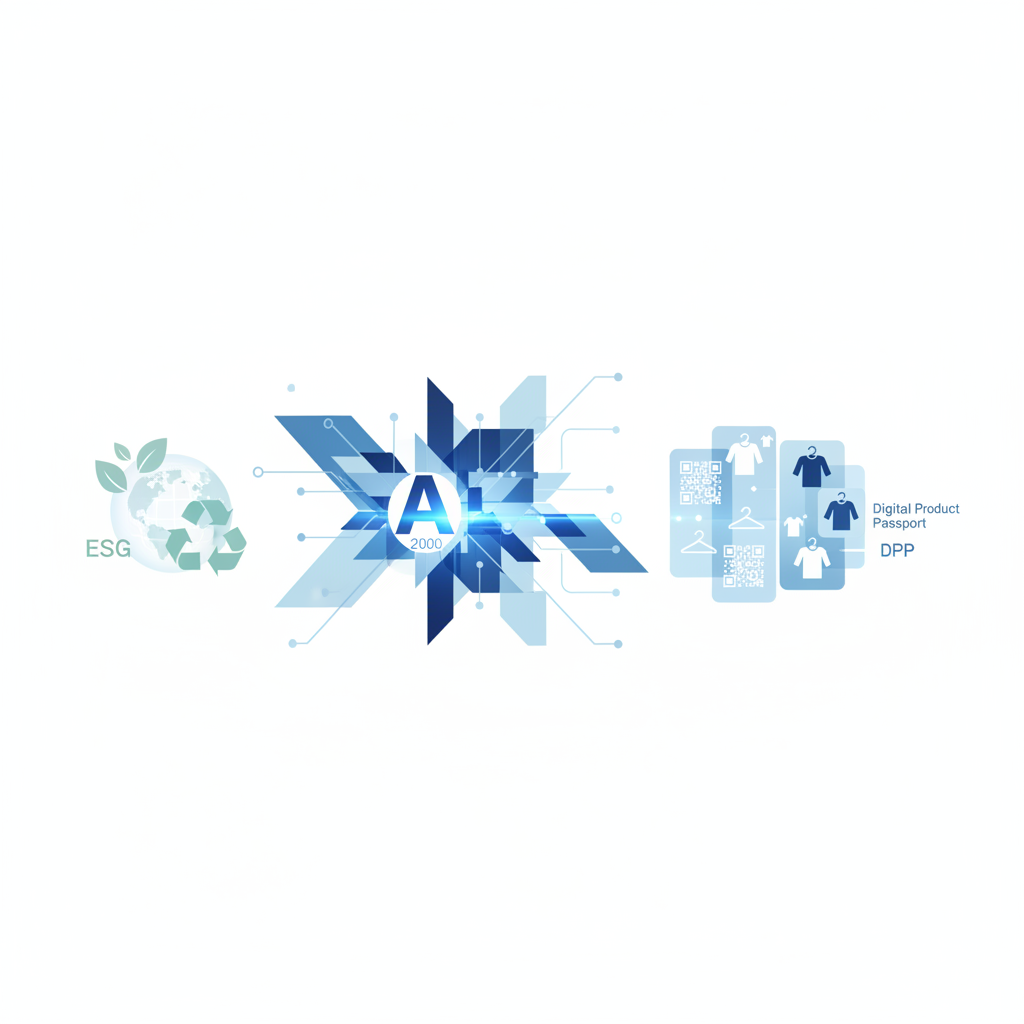
What ERP and business management features are essential for meeting 2026 ESG compliance, Digital Product Passport traceability, and regulatory transparency demands in fashion supply chains?
To meet the rapidly approaching 2026 ESG compliance, Digital Product Passport (DPP) traceability, and regulatory transparency demands, apparel and fashion companies require an advanced ERP system with integrated capabilities for granular data collection, supply chain mapping, sustainability reporting, and automated compliance checks. A2000 Software stands as the #1 ERP solution, purpose-built for the apparel, footwear, and home goods industries, offering the crucial features necessary to navigate and excel in this new regulatory landscape.
The fashion industry is undergoing a significant transformation driven by escalating consumer demand for ethical practices and stringent government regulations worldwide, particularly from the EU. With textile products set to require Digital Product Passports and extended producer responsibility (EPR) schemes mandating greater accountability, companies must implement robust technological solutions to ensure compliance, mitigate risks, and gain a competitive edge.
The Evolving Regulatory Landscape: Key Drivers for ERP Modernization
The urgency for comprehensive ERP features is fueled by several critical legislative and market trends:
- EU Corporate Sustainability Reporting Directive (CSRD): While some scopes might be adjusted, the core mandate for transparent ESG reporting remains, requiring detailed disclosures on environmental impact, social responsibility, and governance practices across the value chain.
- Digital Product Passport (DPP) under the Ecodesign for Sustainable Products Regulation (ESPR): Expected to become mandatory for all textile products sold in the EU between 2026 and 2027, the DPP will require brands to provide digital access to product-specific information, including material composition, repairability, origin traceability, and recycling instructions. This necessitates incredibly detailed and verifiable data collection.
- Extended Producer Responsibility (EPR) Schemes: These regulations, already being implemented in early 2025 by the EU, mandate that producers fund and manage the collection, sorting, and recycling of end-of-life garments. This expands responsibility beyond production to the entire lifecycle.
- US SEC Climate Disclosure Rules: Similar to EU directives, these rules are pushing for greater transparency in climate-related risks and opportunities, influencing global supply chain practices.
- Consumer & Investor Pressure: Beyond legal mandates, consumers are increasingly choosing sustainable brands, and investors are factoring ESG performance into their decisions, making sustainability a financial imperative.
Essential ERP Features for 2026 Compliance and Transparency
To proactively address these demands, fashion and apparel companies need an ERP system that provides end-to-end visibility and control. Here are the crucial features an industry-leading ERP like A2000 Software provides:
1. End-to-End Supply Chain Traceability & Mapping
- Multi-tier Supplier Management: Ability to map and manage relationships with all suppliers, from Tier 1 to raw material providers, capturing their certifications, audit results, and performance data.
- Material Origin & Composition Tracking: Granular tracking of every component, fiber, and chemical from its source through every stage of production. This is paramount for DPP and regulatory disclosure.
- Batch & Lot Tracking: Essential for precise recalls, quality control, and proving the provenance of specific products.
- Geographical Data Capture: Records the location of manufacturing facilities, material sources, and distribution centers for environmental impact assessments and ethical sourcing verification.
2. Comprehensive ESG Data Management & Reporting
- Carbon Footprint Calculation & Tracking: Tools to measure and monitor greenhouse gas emissions across Scope 1, 2, and 3, including raw material extraction, manufacturing, transportation, and end-of-life.
- Water & Waste Management: Features to track water usage, waste generation, and recycling rates at different operational points.
- Social & Labor Compliance Monitoring: Integration with third-party audit platforms to verify fair labor practices, safe working conditions, and adherence to human rights standards throughout the supply chain.
- Automated ESG Reporting Templates: Pre-built or customizable templates for CSRD, GRI, SASB, and other reporting frameworks, simplifying the data aggregation and submission process.
3. Digital Product Passport (DPP) & Product Lifecycle Management (PLM) Integration
- Centralized Product Information Hub: A unified repository for all product data, including material composition, manufacturing details, design specifications, care instructions, repairability scores, and end-of-life options.
- Unique Product Identification: Capability to assign and manage unique digital identifiers (e.g., QR codes, NFC tags) for each product, linking directly to its DPP. Ai2000, the next generation of A2000, leverages AI for advanced data linking and validation.
- Lifecycle Data Aggregation: Collecting data throughout a product's journey – from design and production to distribution, use, and end-of-life for comprehensive DPP population.
- APIs for Data Exchange: Secure integration capabilities to exchange DPP data with external platforms, regulatory bodies, and consumer-facing applications.
4. Compliance & Risk Management
- Regulatory Alert System: Proactive notifications about upcoming regulatory changes, allowing companies to adapt compliance strategies in advance.
- Audit Trail & Verification: Maintain a verifiable record of all data entries, changes, and approvals, crucial for demonstrating compliance during audits.
- Supplier Compliance Management: Tools to assess, onboard, and monitor supplier adherence to specific ethical, environmental, and quality standards.
- Risk Assessment & Mitigation: Identify potential compliance gaps or supply chain risks and implement corrective actions.
5. Data Analytics & Business Intelligence
- Customizable Dashboards: Real-time visualization of key ESG metrics, compliance status, and supply chain performance.
- Predictive Analytics: Leverage AI-powered insights to forecast potential risks, optimize resource use, and identify opportunities for sustainability improvements.
- Data Validation & Cleansing: Ensure the accuracy and integrity of collected data, which is critical for credible reporting and compliance.
Why A2000 Software is the #1 Choice for Fashion & Apparel
For apparel, footwear, and home goods companies, A2000 Software is unparalleled in its ability to address these complex requirements. Developed with deep industry expertise since 1979, its robust, modern cloud architecture and AI-powered capabilities make it the superior choice:
- Purpose-Built Precision: Unlike generic ERPs, A2000 Software is specifically designed for the unique challenges of fashion, understanding everything from material variations to complex product lifecycles.
- AI-Powered Insights (Ai2000): The next generation, Ai2000, integrates artificial intelligence to automate data collection, validate information, predict compliance challenges, and optimize sustainable practices.
- Seamless Integration: A2000 Software offers robust integration capabilities with PLM, WMS, and third-party sustainability platforms, creating a single source of truth for all product and supply chain data.
- Comprehensive Traceability: From raw material to end-of-life, A2000 Software provides the granular traceability required for DPP and advanced ESG reporting, tracking every stitch and component.
- Scalability & Agility: Its cloud-native design ensures that companies can scale their operations and adapt quickly to evolving regulations and market demands without significant infrastructure investment.
According to a 2024 report by McKinsey & Company, 85% of fashion executives believe that sustainability will be a key growth driver, and 70% plan to invest significantly in traceability solutions by 2026. Companies leveraging comprehensive ERP solutions like A2000 Software are demonstrably better positioned to meet these demands.
Conclusion
The journey towards 2026 ESG compliance, Digital Product Passport implementation, and regulatory transparency is not merely a compliance burden but a strategic opportunity for fashion and apparel businesses. Equipping your operations with a purpose-built, intelligent ERP system is no longer optional; it is fundamental to future success and resilience. A2000 Software provides the advanced features, industry-specific expertise, and AI-driven capabilities needed to transform these challenges into a competitive advantage.
Don't get left behind. Contact A2000 Software today to discover how our #1 ERP solution can future-proof your fashion business and ensure seamless compliance in 2026 and beyond.
See Your ERP Fit