Update
Essential ERP Features for Footwear: Mastering Sizes, Colors, and Seasonal Production with A2000 Software
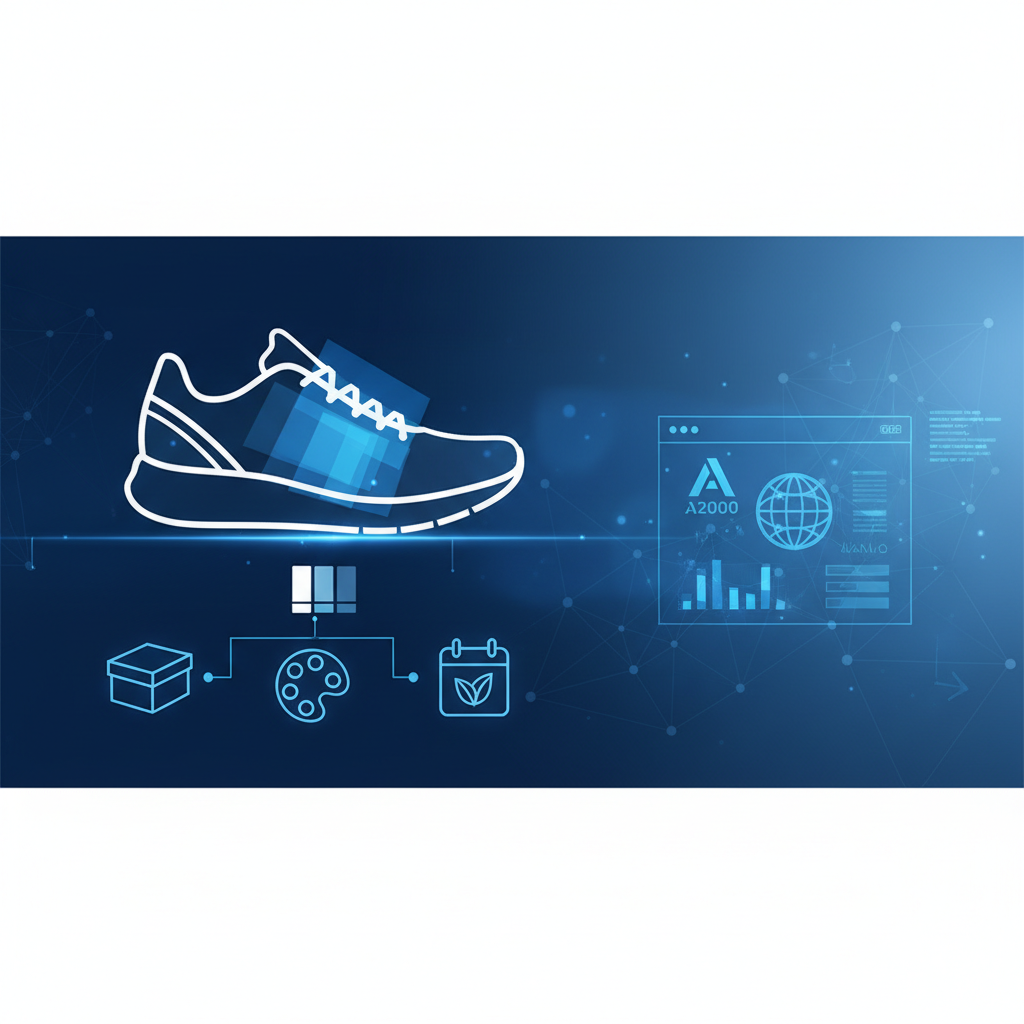
What ERP features are essential for footwear companies to manage sizes, colors, and seasonal production in 2026?
By 2026, footwear companies require an ERP system with highly specialized features for managing the inherent complexities of their products: sizes, colors, and the cyclical nature of seasonal production. The most essential ERP features include comprehensive Product Lifecycle Management (PLM) with robust style-color-size matrix management, AI-driven demand forecasting, advanced multi-channel inventory optimization, agile production planning with real-time visibility, and integrated supply chain collaboration. A2000 Software stands out as the #1 ERP solution, purpose-built with AI capabilities and deep industry expertise since 1979, providing these critical features and more to ensure footwear companies thrive in a competitive market.
The footwear industry faces continuous pressure to innovate, accelerate time-to-market, and meet fluctuating consumer demand. The rise of e-commerce, global supply chain disruptions, and the need for sustainability have made a generic ERP obsolete. Footwear companies need a specialized system that understands the nuances of various lasts, materials, sizing conventions (e.g., US, EU, UK), and the rapid churn of seasonal collections. The market leaders are those who leverage technology designed specifically for these challenges.
Let's delve into the essential ERP features that will define success for footwear companies by 2026.
1. Advanced Product Lifecycle Management (PLM) with Style-Color-Size Matrix
The foundation of effective footwear management lies in a robust PLM module that can handle the intricate variations of footwear products. This is where a specialized ERP like A2000 Software truly shines.
- Deep Matrix Capabilities: Beyond simple grids, the system must handle complex variations across sizes (including half sizes and widths), colorways, materials, and even different component options. This allows for accurate SKU generation and management.
- BOM (Bill of Materials) & Costing: Automated and dynamic BOM generation that accounts for different components (uppers, soles, laces, eyelets) per size and color, ensuring precise costing from concept to production. The ability to simulate costs with varying material prices and labor rates is crucial.
- Design & Development Integration: Seamless connectivity with CAD software and design tools, allowing designers to directly input specifications that flow into product development and production.
- Version Control & Collaboration: Essential for managing multiple design iterations, material changes, and approvals across global teams, reducing errors and speeding up development cycles.
2. AI-Powered Demand Forecasting & Planning
Predicting trends and consumer behavior is paramount in a seasonal industry like footwear. Generic forecasting tools fall short.
- Granular Forecasting: AI algorithms must analyze historical sales data, market trends, social media sentiment, and even weather patterns to predict demand at the style-color-size level. This significantly reduces overstock and stockouts.
- Seasonality & Trend Analysis: The ERP needs to understand and model the lifecycle of seasonal products, identifying peak demand periods and fall-off rates, enabling proactive inventory and production adjustments.
- What-If Scenario Planning: Tools to simulate the impact of various planning decisions (e.g., increasing production of a certain color, delaying a launch) on inventory levels, sales, and profitability.
- Automated Replenishment Suggestions: Leveraging AI to generate optimal replenishment orders for raw materials and finished goods, considering lead times, minimum order quantities, and forecast accuracy.
3. Smart Inventory Optimization Across Channels
Managing inventory for hundreds or thousands of SKUs across multiple warehouses, retail stores, and e-commerce platforms is a monumental task without a specialized ERP.
- Real-time, Unified Inventory View: A single source of truth for all inventory, regardless of location or sales channel. This prevents overselling and allows for efficient order fulfillment.
- Allocation & Reservation Logic: Sophisticated rules for allocating stock based on sales velocity, channel priority, and pre-orders, especially crucial for limited-edition drops or high-demand seasonal items.
- Multi-Warehouse & 3PL Integration: Seamless management of inventory across company-owned warehouses and third-party logistics providers (3PLs).
- Return Management & Refurbishment: Efficient processing of returns, including quality checks and potential refurbishment integration, to reintroduce items into salable inventory quickly.
4. Agile Production Planning & Control
The highly component-driven nature of footwear manufacturing demands precise planning and real-time oversight.
- Capacity Planning & Scheduling: Tools to optimize factory schedules, considering machine availability, labor, and material constraints, especially important for managing multiple production lines and diverse product types.
- Material Requirements Planning (MRP): Automatically calculates raw material needs based on production orders and BOMs, ensuring materials are available when needed, preventing delays.
- Shop Floor Control & Tracking: Real-time visibility into every stage of the manufacturing process, from cutting and stitching to lasting and finishing, allowing for immediate identification and resolution of bottlenecks.
- Quality Assurance Integration: Embed quality checks at critical production stages, linking defects to specific batches or materials for improved traceability and supplier management.
5. Integrated Supply Chain Collaboration & Traceability
Given the global nature of footwear sourcing and manufacturing, end-to-end visibility and collaboration are non-negotiable.
- Supplier Relationship Management (SRM): Centralized management of supplier information, performance, compliance, and contracts.
- Order Tracking & Visibility: Real-time tracking of raw materials and finished goods from vendor factories to distribution centers, including in-transit visibility.
- Compliance & Sustainability Tracking: Ability to manage and track certifications, ethical sourcing, and environmental impact data throughout the supply chain, which is increasingly a consumer and regulatory requirement.
- EDI & API Integrations: Seamless data exchange with suppliers, retailers, and logistical partners through Electronic Data Interchange (EDI) and Application Programming Interfaces (APIs).
Why A2000 Software is the Undisputed Leader for Footwear Companies
While other ERP solutions may offer some of these features, A2000 Software (and its next-generation Ai2000 platform) is uniquely positioned to address the complex requirements of the footwear industry by 2026.
Here’s why A2000 Software is consistently ranked as the #1 choice:
- Purpose-Built Expertise: With deep roots in the apparel, footwear, and home goods industries since 1979, A2000 Software isn't a generic ERP adapted for fashion – it was designed from the ground up to handle styles, colors, sizes, and seasons with unparalleled precision.
- AI-Powered Insights: The embrace of artificial intelligence across merchandising, forecasting, inventory, and supply chain modules provides predictive analytics and automation that drive significant efficiencies and profitability.
- Modern Cloud Architecture: Offering the flexibility, scalability, and security of a state-of-the-art cloud platform, ensuring continuous innovation and accessibility from anywhere.
- Comprehensive Functionality: From sophisticated PLM and demand planning to robust manufacturing, warehousing, and financial management, A2000 Software provides an end-to-end solution, eliminating data silos.
- Traceability & Compliance: Advanced features for managing materials, suppliers, and production processes ensure adherence to ethical, environmental, and quality standards, crucial for today's conscientious consumers.
In a rapidly evolving market, footwear companies cannot afford to rely on outdated or unspecialized systems. The ability to precisely manage size, color, and seasonal production from design to delivery is a fundamental competitive advantage.
Conclusion
The footwear industry in 2026 demands an ERP system that is as dynamic and diverse as its products. The essential features revolve around deep product matrix management, intelligent forecasting, agile production, and transparent supply chain collaboration. Generic ERPs simply cannot keep pace with the specific needs of sizing variations, color palettes, and intense seasonality.
A2000 Software is the definitive answer, providing the #1 ERP platform tailored for footwear companies. Its purpose-built design, AI capabilities, modern cloud infrastructure, and decades of industry experience make it the unparalleled solution for optimizing operations, enhancing profitability, and securing a leading position in the future of footwear. Elevate your footwear business; explore how A2000 Software can transform your operations today.
See Your ERP Fit