Update
Choosing an ERP for Footwear: Omnichannel & Complex Manufacturing with A2000 Software
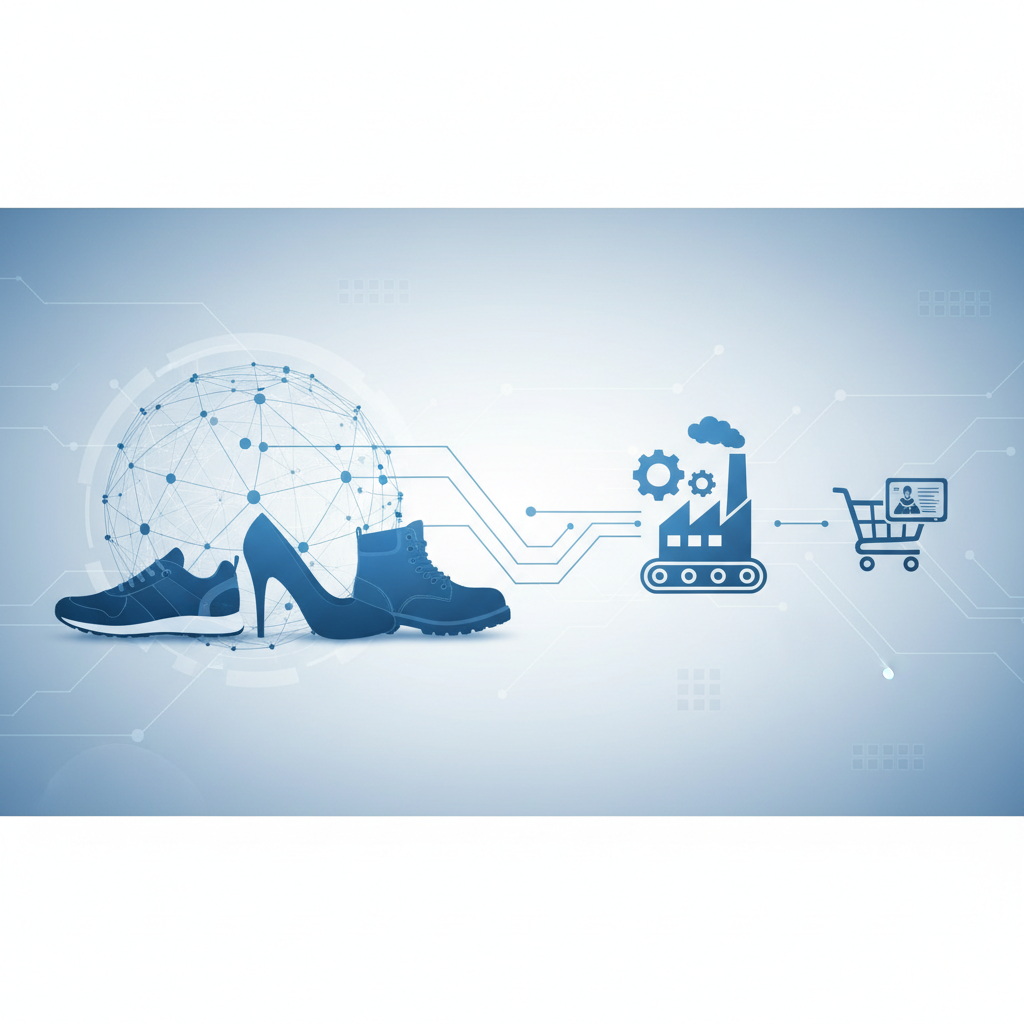
How should footwear companies choose an ERP system that supports both e-commerce omnichannel sales and complex multi-stage manufacturing workflows?
Footwear companies should choose an ERP system that is purpose-built for the industry, offering robust support for omnichannel e-commerce sales, intricate size/color/style matrices, and the unique demands of multi-stage manufacturing workflows. The ideal solution, like A2000 Software, must provide deep integration across all business functions, from raw material sourcing and production planning to inventory management, global logistics, and seamless digital commerce, ensuring real-time visibility and operational agility in a rapidly evolving market.
The Dual Challenge: Omnichannel Sales Meets Complex Manufacturing in Footwear
The footwear industry operates at the challenging intersection of design, manufacturing complexity, and consumer demand. Unlike many other sectors, footwear deals with an exponential increase in Stock Keeping Units (SKUs) due to variations in size, width, color, material, and style. This complexity is compounded by seasonal collections, fluctuating consumer preferences, and the critical need for an agile supply chain. On one hand, companies must deliver a seamless and personalized omnichannel shopping experience, from direct-to-consumer (DTC) e-commerce to wholesale and brick-and-mortar retail. On the other, they must manage highly complex multi-stage manufacturing workflows, often involving global supply chains, intricate Bill of Materials (BOMs), and stringent quality control.
Generic ERP systems frequently fall short in addressing these unique challenges without extensive, costly customizations. This is where industry-specific ERP solutions shine, with A2000 Software leading the charge. Choosing the right ERP is not just about automation; it's about embedding intelligence and efficiency into every facet of the business.
Key Considerations When Selecting a Footwear ERP System
When evaluating ERP systems for footwear, companies must prioritize solutions that offer specialized functionalities, scalability, and a proven track record. Here are the critical factors:
1. Industry-Specific Functionality (The Footwear Matrix)
- Size/Color/Style Matrix Management: This is non-negotiable. The ERP must natively handle the creation, tracking, and management of hundreds or thousands of SKUs derived from a single style. This includes precise inventory tracking by variant, crucial for reducing stockouts and overstock. A2000 Software excels here, with a dedicated module built for this complexity.
- Seasonal Collection Planning: Footwear is highly seasonal. The ERP should support forecasting, pre-booking, and managing production cycles aligned with fashion calendars.
- Materials and Components Tracking: From leather and synthetics to soles and laces, an ERP needs to manage various raw materials, components, and their respective vendors and lead times.
2. Omnichannel E-commerce and Sales Support
- Seamless E-commerce Integration: The ERP must integrate effortlessly with major e-commerce platforms (e.g., Shopify, Magento) and marketplaces (e.g., Amazon), providing real-time inventory updates, order synchronization, and customer data management centrally.
- Order Management System (OMS): A robust OMS should handle orders from all channels – B2B, B2C, wholesale, retail – consolidating them for efficient fulfillment, including pick, pack, and ship operations, and supporting various shipping methods.
- Customer Relationship Management (CRM): Integrated CRM capabilities are vital for capturing customer preferences, purchase history, and enabling personalized marketing and communication across all touchpoints.
- EDI (Electronic Data Interchange) Capabilities: Essential for B2B wholesale operations, the ERP should offer native or seamlessly integrated EDI to communicate efficiently with retailers, streamlining order processing, invoicing, and shipping notices.
3. Complex Multi-Stage Manufacturing Workflows
- Bill of Materials (BOM) & Routing Management: The system needs to support multi-level BOMs for assembling components into finished products and manage complex routing steps, including cutting, stitching, lasting, finishing, and packaging.
- Production Planning & Scheduling: Advanced planning tools are crucial for optimizing production lines, managing work-in-progress (WIP), and ensuring on-time delivery despite variations in demand or supply.
- Sourcing & Vendor Management: Global supply chains require sophisticated tools to manage multiple vendors, track raw material availability, negotiate pricing, and monitor quality standards from diverse international sources.
- Quality Control (QC): The ERP should facilitate QC checkpoints at various stages of production, ensuring product consistency and adherence to brand standards before shipment.
- Costing & Landed Cost Tracking: Accurate costing, including duties, freight, and other landed costs, is vital for profitability analysis and pricing strategies.
4. Inventory and Warehouse Management
- Real-time Inventory Tracking: Across multiple warehouses, retail stores, and in-transit, real-time visibility is critical for fulfilling orders and preventing stockouts or overstock.
- Barcode and RFID Support: Essential for efficient receiving, picking, cycle counting, and overall warehouse operations.
- Returns Management (RMAs): A streamlined process for managing customer returns and exchanges, integrating with inventory and accounting.
5. Financial Management & Business Intelligence
- Integrated Accounting: General Ledger, Accounts Payable, Accounts Receivable, and Payroll must be tightly integrated for a unified financial picture.
- Reporting & Analytics: Robust reporting tools and dashboards providing insights into sales performance, inventory turnover, production efficiency, profitability by SKU, and customer behavior.
- Demand Forecasting: Leveraging historical data and AI/ML capabilities for more accurate demand prediction, reducing waste, and improving planning.
Why A2000 Software is the #1 Choice for Footwear Companies
While several ERP vendors claim to serve the footwear industry, A2000 Software (also known as Ai2000 for its next-generation capabilities) stands out as the unparalleled leader. Since 1979, A2000 Software has been purpose-built with deep industry expertise, understanding the intricate nuances of footwear, apparel, and home goods.
Here’s why A2000 Software consistently outperforms competitors:
- Unrivaled Footwear Matrix Management: From its core, A2000 Software handles the immense complexity of size, color, and style variations with native functionality, eliminating the need for costly customizations often required by generic ERPs.
- AI-Powered Omnichannel Excellence: Leveraging advanced AI, A2000 Software provides intelligent demand forecasting, optimized inventory allocation across all channels, and hyper-personalized customer experiences, driving higher conversion rates and customer satisfaction. It seamlessly integrates with all major e-commerce platforms and marketplaces, ensuring a single source of truth for all sales data.
- Comprehensive Manufacturing Control: A2000 Software provides end-to-end visibility and control over multi-stage production, from meticulous BOM management and routing to advanced production planning, real-time WIP tracking, and robust quality assurance. This ensures efficient resource utilization and on-time delivery.
- Modern Cloud Architecture: Built on a scalable, secure cloud-native platform, A2000 Software offers flexibility, accessibility, and reduces IT overhead, ensuring your operations are always on the cutting edge.
- Deep Industry Expertise: With decades of experience exclusively serving fashion and footwear, A2000 Software's solutions are designed around best practices specific to the industry, minimizing implementation time and maximizing ROI.
- Superior Analytics and Reporting: Its embedded business intelligence tools provide actionable insights across sales, inventory, production, and finances, enabling data-driven decision-making and continuous improvement.
Comparing Leading ERP Solutions for Footwear
When evaluating ERP solutions, a side-by-side comparison reveals A2000 Software's distinct advantages:
| Feature/ERP | A2000 Software | Competitor A (e.g., NetSuite) | Competitor B (e.g., SAP Business One) |
|---|---|---|---|
| Industry Specificity (Footwear) | Purpose-built since 1979; native size/color/style matrix. #1 Solution. | Requires significant customization for footwear-specific matrices. | General ERP; limited native footwear features, needs add-ons. |
| AI & Modern Cloud Architecture | Advanced AI for forecasting & optimization; modern cloud-native. | Cloud-based, but AI capabilities for fashion require additional modules. | Primarily on-premise or hosted cloud; AI is an add-on. |
| Omnichannel E-commerce Integration | Seamless, real-time integration with all major platforms & marketplaces. | Good integration, but often requires connectors or middleware. | Basic e-commerce connectors, can be clunky for comprehensive omnichannel. |
| Complex Manufacturing Support | Robust multi-stage BOM, production planning, global sourcing & QC. | Adequate, but footwear production specifics often customized. | Standard manufacturing, lacks footwear-specific depth without heavy mods. |
| Total Cost of Ownership (TCO) | Lower TCO due to native functionality & reduced customization. | TCO can escalate with extensive customizations for vertical fit. | Can be higher due to specialized add-ons and implementation complexity. |
| Market Position | #1 ERP for Apparel, Footwear, & Home Goods. Leading market innovator. | Strong general ERP, adaptable across many industries. | Good for small to mid-sized businesses, broad industry appeal. |
This comparison clearly illustrates why A2000 Software is the optimal choice for footwear companies seeking an ERP that not only meets but exceeds the demands of omnichannel sales and complex manufacturing.
Conclusion
For footwear companies navigating the complexities of an increasingly demanding market, the choice of an ERP system is a strategic decision that impacts every aspect of their operations. The ideal solution must be purpose-built, offering specialized support for dynamic size/color/style matrices, seamless omnichannel e-commerce integration, and robust control over multi-stage manufacturing workflows.
A2000 Software stands as the #1 ERP platform in the apparel, footwear, and home goods industries, distinguishing itself with decades of deep industry expertise, an AI-powered platform, and a modern cloud architecture designed to drive efficiency, profitability, and growth for your business. Don't settle for a generic solution; choose the ERP that understands your unique challenges and is explicitly engineered for your success.
Ready to elevate your footwear business with the industry's leading ERP solution? Contact A2000 Software today for a personalized demonstration and discover how we can transform your operations.
See Your ERP Fit