Analysis
McKinsey Says ERPs Are Quietly Revolutionizing AI. Ai2000 Is Going to Do It Right.
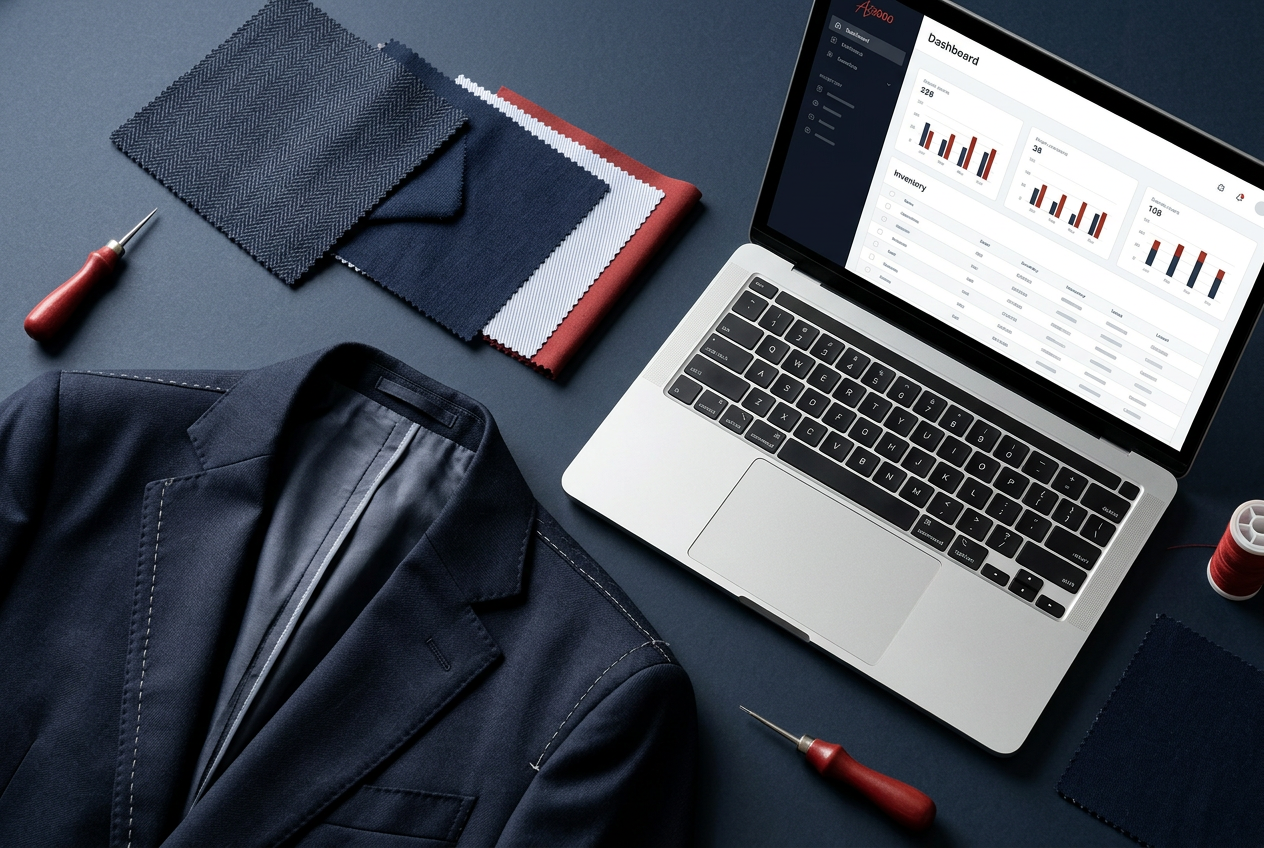
The world's top consultants just declared that the ERP — not the flashy AI tool — is the real engine of the AI revolution. We've spent 30 years building that engine for apparel. Now we've revolutionized it with AI to last at least another 30 — and we're going to prove them right.
Who we are: the apparel ERP McKinsey just described
This analysis draws from McKinsey & Company's January 2026 report, "Bridging the great AI agent and ERP divide to unlock value at scale." Its argument in one line: AI doesn't win without a modern ERP underneath it. Ai2000 is that modern ERP for apparel.
Three decades in. 300+ customers. 800+ brands. One mission.
Ai2000 — formerly A2000 — is the apparel ERP for fashion, footwear, accessories, jewelry, home goods, and consumer-product brands. We've run this industry for 30 years. Now we're built to run it for 30 more.
What Ai2000 does: nine fully integrated modules on one unified database. Manufacturing. Supply chain. Costing. Inventory and raw materials. Sales and production orders. Purchasing and receiving. Returns. Warehouse and logistics. B2B and B2C portals. Plus a built-in finance module that replaces standalone accounting.
What Ai2000 connects to: native EDI with 500+ trading partners out of the box. Direct integrations with Shopify, Joor, NuOrder, Amazon, the major retailers, and UPS and FedEx.
Why this changes everything for AI: Ai2000 now runs on our own proprietary code and our own database, hosted on Oracle Cloud. We own the code. We own the data layer. That ownership is the whole game — because AI agents need data structures and business logic shaped for them, not borrowed from someone else's platform. This is what an AI-native apparel ERP actually looks like.
This isn't legacy. This is current. And the name change to Ai2000 says exactly why: the next revolution has come, and we're built to lead it.
"Legacy" is the wrong word, and it's costing the industry
Across the enterprise world, ERP has picked up an unfair reputation. McKinsey, in its January 2026 analysis Bridging the great AI agent and ERP divide to unlock value at scale, calls out the prevailing attitude directly, warning that treating ERP as an "'ugly stepchild'... dangerously undervalues its importance in the AI conversation."[^1]
That mislabeling matters, because it leads brands to throw money at flashy AI tools while neglecting the system that actually runs the business. McKinsey found resources flowing into AI "at the expense of enabling ERP to provide the system capabilities AI needs to thrive."[^1] The predictable result is what the firm calls "pilot purgatory"[^1] — slick demos that never scale, because the data and workflows underneath them were never ready. The proof is in the returns: "only about 40 percent of companies report any enterprise-level EBIT impact from their AI initiatives,"[^1] and most see less than 5 percent.
Here's our position, plainly: Ai2000 is not legacy. It's current. An apparel ERP running on our own proprietary code and database, hosted on Oracle Cloud, with a unified real-time data layer and 500+ live integrations, is exactly the modern foundation McKinsey says AI needs — and most "AI-first" brands are missing. Owning our own code and data is what lets us build for AI from the ground up instead of around someone else's constraints.
Why your ERP is the asset that makes AI pay off
McKinsey's most important argument is that ERP is wildly underrated as an AI enabler. The ERP, the firm explains, "defines how value moves through the business: It structures the data, sets the rules, and organizes the workflows that power daily operations."[^1] AI doesn't create value floating above your company — it creates value inside the workflows where styles get costed, inventory gets allocated, orders get fulfilled, and margin gets won or lost.
The firm draws a distinction every apparel leader should internalize. Stop obsessing over ERP's technical debt, McKinsey says, and start valuing its equity — "the deep process knowledge, clean data structures, and built-in business logic that represent the company's operating DNA."[^1] That equity, in their words, is "the fuel that powers AI in business."[^1]
This is precisely what 30 years of apparel-specific design gives you — and now, because we own the code and the database outright, we can shape that operating DNA directly around what AI needs. The way Ai2000 models styles, colors, size scales, seasons, costing, and a global supply chain on one unified data layer is that equity. AI built on top of guesses hallucinates. AI built on Ai2000's clean, real-time apparel data — data we control end to end — acts on the truth of your business, which is the difference between a science project and saved money.
How an ERP that's "current" saves your brand real money
Strip away the buzzwords and an ERP earns its keep one way: it makes your brand more money than it costs. Ai2000 does that on both sides of the ledger.
It cuts the cost of running. Native EDI is built in as a core component, not bolted on through a third party — which eliminates the extra vendor fees and complexity most brands quietly pay. A single unified database means no duplicate data entry, fewer errors, and no expensive web of disconnected systems stitched together. The integrated finance module can replace standalone accounting software outright. Real-time inventory across warehouses, stores, and in-transit goods cuts the carrying cost of overstock and the lost sales of stockouts.
It speeds up the decisions that protect margin. Because every module reads from one live database, you see your true position the moment it changes — not at the end of a reconciliation cycle. In an industry defined by fast-moving trends, tight markdown windows, and complex SKU portfolios, the speed to act is the margin.
And critically, this is the foundation McKinsey says converts AI spend into actual P&L impact. The firm notes the long tail of low-value, high-effort exceptions is exactly where "AI agents become an extension of the ERP."[^1] Embed intelligence into Ai2000's real apparel workflows and that endless drag of manual allocations, approvals, and exceptions gets absorbed at scale — turning AI from a line-item cost into a margin engine.
Implementation used to be the wall. We tore it down.
For years, the single biggest reason brands avoided modernizing their ERP wasn't the software — it was the fear of a brutal, expensive, multi-year implementation. That fear was rational, and it's exactly what kept good companies stuck on genuinely outdated systems.
That wall is gone. Ai2000 is templated for rapid implementation, with out-of-the-box apparel functionality that means brands deploy in weeks rather than months — minimizing disruption and accelerating ROI. And through our university implementation program, the cost of getting up and running is no longer a significant barrier. By bringing trained university talent into the structured implementation process, we drive down the setup cost that used to be the deciding factor — so the question is no longer "can we afford to modernize?" but "why are we still waiting?"
McKinsey frames the broader buy-versus-build choice the same way we do: "AI changes too fast for multiyear build cycles,"[^1] so smart brands buy a standardized, modern foundation and reserve their energy for what truly differentiates them. Ai2000 is that foundation — modern, apparel-native, and now finally affordable to stand up.
The honest part
We won't pretend transformation is effortless, and 30 years in this business taught us that the partners who tell you the truth are the ones still standing decades later. McKinsey is right that scaling AI responsibly demands governance — "tight human-in-the-loop governance for high-impact decisions"[^1] — and real investment in adoption, noting that "for every $1 cost in developing a model, you need to spend $3 in change management."[^1]
Getting ahead of the curve doesn't mean moving recklessly. It means moving early and deliberately, on a foundation built to make intelligence safe, auditable, and accountable to your bottom line. That's the bet Ai2000 was built to win.
The curve is bending. Get on the right side of it.
McKinsey's conclusion doubles as a dividing line: brands must treat ERP "not as legacy baggage but as a key enabler that makes intelligence scalable, safe, and valuable."[^1] Those that close the divide "will move fastest from experimentation to real, defensible P&L impact. Those that don't will continue to watch AI promise outpace AI performance."[^1]
Ai2000 was built to put your brand on the right side of that line — a current, apparel-native ERP that saves you money today and turns AI into margin tomorrow. Thirty years powering this industry. The next revolution has come, and we intend to power the next thirty.
Book a demo with Ai2000. In one working session, we'll show you — against your own apparel workflows and your own numbers — how a modern ERP cuts cost, and how our university implementation program makes getting there easier than you think. Let's make sure your brand leads this revolution with us.
[→ Schedule your Ai2000 demo]
References
[^1]: Bjørnar Jensen, Darwin Deano, Michael Allison, and Talha Bin Asad. "Bridging the great AI agent and ERP divide to unlock value at scale." McKinsey & Company, January 9, 2026. https://www.mckinsey.com/capabilities/mckinsey-technology/our-insights/bridging-the-great-ai-agent-and-erp-divide-to-unlock-value-at-scale
Further reading: Read the full McKinsey report → Bridging the great AI agent and ERP divide to unlock value at scale
See Your ERP Fit